
Hilo Negro Wine
Mexican wine is growing up..

One of my favorite activities with wine is tasting new flavors and techniques used in creation. While I was in Mexico for the past four months, I had good opportunities to taste wine grown in Mexico, which mostly resembled Spanish and Italian styles because of similar climate conditions.
Mexico has had a long history of growing wine, having been a colony of Spain, but remarkably, its wines have only begun to reach the USA recently. I suspect that the limited volume of quality wine produced in addition to the marketing or import issues were the historic culprits for this delay.
Consumption of wine in Mexico takes a backseat to beer and liquor, most notably Tequila, so wine is viewed as an afterthought. It's also highly taxed domestically, which puts a damper on any vineyard wanting to produce for local sales. So, many wine producers in Mexico export their production to China and Europe.
Still, there is a prime growing area near the Baja Peninsula known as the Valle de Guadalupe, which is the center of wine production in Mexico. There are also a few smaller areas defying the hot climate conditions in Mexico with wine production and the most notable of them is hosted by Freixenet, which makes sparkling wines.
The best Mexican wine I tasted was made by a newer vineyard known as Hilo Negro, which had an exotic blend of Syrah, Cabernet Sauvignon, and Nebbiolo. Known as "Ricrac", this richly flavored wine was complex and very drinkable with pork dishes. My only regret was not buying a few more bottles.
Hilo Negro is one of many younger winemakers in Mexico that is challenging a growing middle class in its country as well as visiting Europeans & Americans to drink better than simply another Corona beer. One look at their website will tell the same story.
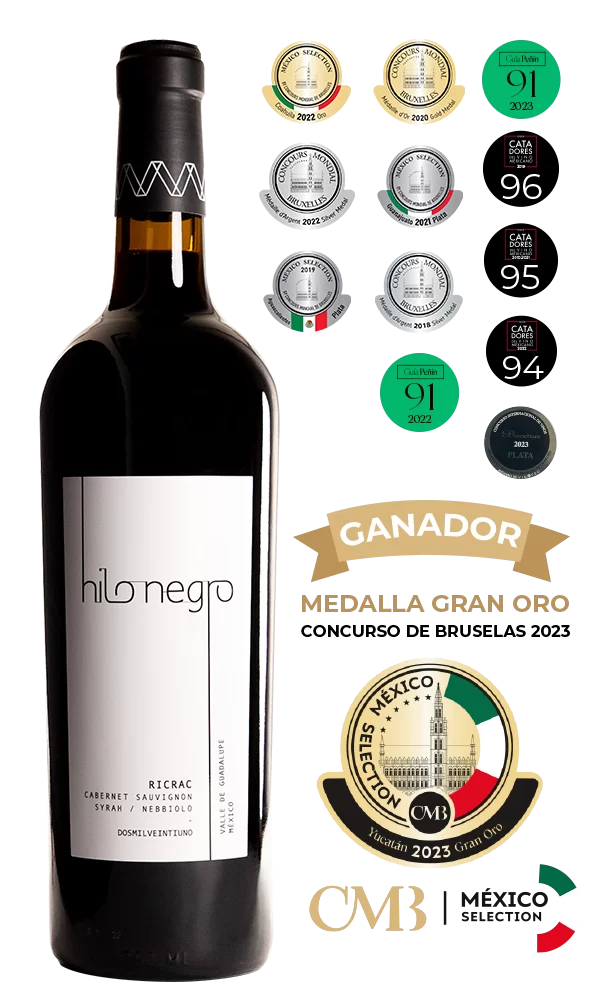
What this means to you is that Mexican wines will eventually start showing up in stores here in the USA by customer request. This trend has already started in Houston and Dallas-Ft Worth to the amazement of generations of people of Mexican descent who did not know wine was being produced in Mexico.
For me, it feels good to get in on something new like this on "the ground floor". The Mexican production of wine also reflects a bit of nationalist pride, which one can see in any real supermarket in Mexico, such as Soriana. Wine selections are usually limited to Mexican, Spanish, and South American countries.
I should note that when one is looking at prices in Mexico for anything, it will look really expensive because the Peso and the US Dollar use the same symbol of $$. When you see a Mexican price for...wine, just divide by 20 and you will get the US price converted (exchange rate is $1 USD = $ 20 Pesos MX).